

Fundamentals of Instructional Design Study Guide
Udutus delivers transformative training through expertise and innovative solutions, focusing on digital learning, STEM education, AI integration, and designer preparation.
Instructional Design (ID) is a systematic process centered around creating effective and engaging learning experiences. It’s more than just assembling content; it’s a deliberate and research-backed approach to facilitating knowledge acquisition and skill development. Udutu’s expertise highlights the evolving landscape of ID, particularly with the integration of emerging technologies like Artificial Intelligence;
This field draws upon cognitive science, learning theories, and instructional technologies to optimize learning outcomes. A core focus is understanding how people learn, and then designing instruction that aligns with those principles. This includes considering learner characteristics, defining clear objectives, and selecting appropriate methods and media.
Currently, ID is experiencing a significant shift with the rise of digital learning in higher education and the need for robust workforce development training. Udutu is at the forefront, exploring AI-powered learning and preparing the next generation of learning architects and educational technologists.
Defining Instructional Design
Instructional Design is the systematic development of instructional specifications and materials, employing learning and instructional theories to efficiently and effectively deliver learning experiences. Udutu emphasizes this systematic approach, recognizing it as crucial for impactful training solutions.
It’s a process that bridges the gap between subject matter expertise and learner needs. Defining ID involves analyzing learning goals, understanding the target audience, and crafting strategies to facilitate knowledge transfer. This isn’t simply about presenting information; it’s about structuring it in a way that promotes understanding and retention.
Udutu’s work in STEM education and higher education demonstrates a commitment to technology-enhanced learning, showcasing how ID principles can be applied across diverse contexts. Furthermore, the ethical and responsible integration of AI, as championed by Udutu, is now a defining aspect of modern instructional design.
The Importance of a Systematic Approach
A systematic approach to instructional design, as advocated by Udutu, is paramount for creating effective learning experiences. Without it, training can be disjointed, inefficient, and ultimately fail to achieve desired outcomes. This methodology ensures alignment between learning objectives, instructional strategies, and assessment methods.

Udutu’s expertise highlights the value of models like ADDIE and Dick & Carey, which provide frameworks for analyzing needs, designing interventions, developing materials, implementing programs, and evaluating results. This iterative process allows for continuous improvement and refinement.
Furthermore, a systematic approach is vital when integrating emerging technologies like AI, as Udutu demonstrates. Careful planning and evaluation are essential to ensure AI enhances, rather than hinders, the learning process. This structured methodology maximizes return on investment and guarantees impactful workforce development training.

Instructional Design Models
Udutu leverages models like ADDIE, ASSURE, and Dick & Carey, alongside Bloom’s Taxonomy, to craft impactful learning experiences and optimize instructional strategies.
ADDIE Model: Analysis, Design, Development, Implementation, Evaluation
Udutu expertly utilizes the ADDIE model – a foundational instructional design framework. Analysis defines the learning need and learner characteristics, ensuring targeted instruction. The Design phase outlines learning objectives and assessment strategies, guided by principles like Bloom’s Taxonomy.
Development involves creating learning materials, potentially leveraging Udutu’s multimedia production and PowerPoint to course conversion capabilities. Implementation focuses on delivering the instruction, often through a Learning Management System (LMS), with options for proctoring services for online assessments.
Finally, Evaluation assesses the effectiveness of the instruction, informing revisions and improvements. This systematic approach, championed by Udutu, ensures impactful and measurable learning outcomes, benefiting higher education, STEM fields, and workforce development initiatives. Udutu’s AskU: AI Mentor can further refine each stage.
ASSURE Model: Analyze Learners, State Objectives, Select Methods, Utilize Media, Require Learner Participation, Evaluate & Revise
Udutu champions the ASSURE model, a learner-focused instructional design approach. Beginning with Analyze Learners, understanding their needs is paramount. Next, clearly State Objectives, aligning with Bloom’s Taxonomy for measurable outcomes. Select Methods that cater to diverse learning styles, potentially incorporating technology-enhanced learning environments.
Utilize Media effectively, leveraging Udutu’s multimedia production expertise to create engaging content. Crucially, Require Learner Participation through interactive activities and assessments. Finally, Evaluate & Revise based on feedback and performance data, ensuring continuous improvement.
Udutu’s LMS and AI-powered tools, like AskU: AI Mentor, facilitate each step. This model supports STEM education, higher education digital learning, and workforce development training, delivering impactful and adaptable learning experiences. Udutu ensures ethical AI integration throughout the process.
Dick and Carey Model: Systematic Approach to Instructional Design
Udutu expertly implements the Dick and Carey Model, a robust, systematic approach to instructional design. This begins with a comprehensive needs assessment and task analysis, defining clear learning goals. Following this, instructional objectives are meticulously crafted, aligning with desired learner outcomes and leveraging Bloom’s Taxonomy.
Udutu then focuses on developing instructional strategies, selecting appropriate media – utilizing its multimedia production capabilities – and creating assessment tools. A crucial step involves piloting and revising the instruction based on learner performance data. This iterative process ensures effectiveness.

Udutu’s LMS and authoring tools streamline this model, supporting STEM education, higher education, and workforce development. AskU: AI Mentor can assist in objective creation and assessment design, ensuring a truly systematic and impactful learning experience. Udutu prioritizes ethical AI integration within this framework.
Bloom’s Taxonomy and Learning Objectives
Udutu champions Bloom’s Taxonomy as a foundational element in crafting effective learning objectives. This hierarchical framework – encompassing Remembering, Understanding, Applying, Analyzing, Evaluating, and Creating – guides the design of instruction to foster higher-order thinking skills.
Udutu’s instructional designers utilize Bloom’s Taxonomy to ensure objectives are measurable and aligned with desired cognitive processes. This approach is particularly vital in STEM education and workforce development, where complex problem-solving is paramount.
AskU: AI Mentor assists in formulating objectives at various taxonomic levels, promoting a balanced and comprehensive learning experience. Udutu emphasizes the importance of clearly defined objectives for both learner guidance and assessment validity. Through careful application of Bloom’s Taxonomy, Udutu transforms training into impactful skill development, preparing the next generation of learning architects.
Writing Effective Learning Objectives (SMART Goals)
Udutu prioritizes the creation of SMART learning objectives – Specific, Measurable, Achievable, Relevant, and Time-bound – as a cornerstone of successful instructional design. This methodology ensures clarity and focus throughout the learning process.
Udutu’s instructional coaches guide clients in crafting objectives that directly address performance gaps and align with overall training goals. Utilizing AskU: AI Mentor, designers can refine objectives for optimal impact and assess their alignment with Bloom’s Taxonomy.
Udutu believes SMART objectives are crucial for effective assessment and evaluation, particularly within LMS environments and proctoring services. By employing this framework, Udutu delivers training solutions that demonstrably improve learner outcomes, fostering a culture of continuous improvement and preparing future instructional designers for success.

Key Principles of Learning
Udutu champions adult learning (Andragogy), cognitive load theory, and constructivism, integrating AI to enhance learning design and ethical AI implementation.
Adult Learning Principles (Andragogy)
Udutu recognizes that adult learners differ significantly from children, necessitating a distinct instructional approach – Andragogy. Unlike pedagogy, which is teacher-focused, andragogy centers on the learner’s experience and self-direction.
Key principles include acknowledging adults’ accumulated knowledge and relating learning to their existing experiences. Adults are motivated to learn when the material is relevant to their lives and helps them solve real-world problems.
Furthermore, adults prefer practical application over theoretical concepts and appreciate opportunities for active participation and collaboration. They also possess a strong need to know why they are learning something, and benefit from a learning environment that respects their autonomy and encourages self-assessment.

Udutu’s solutions are designed to facilitate these principles, fostering a more engaging and effective learning experience for adult learners, ultimately driving better outcomes.
Cognitive Load Theory
Udutu understands the importance of Cognitive Load Theory (CLT) in instructional design. CLT posits that our working memory has limited capacity, and effective instruction minimizes extraneous cognitive load to optimize learning.
There are three types of cognitive load: intrinsic (inherent complexity of the material), extraneous (caused by poor instructional design), and germane (dedicated to schema construction). Udutu’s approach focuses on reducing extraneous load through clear presentation, eliminating distractions, and utilizing multimedia effectively.
By segmenting complex information into manageable chunks, providing scaffolding, and employing signaling techniques, we help learners focus their cognitive resources on understanding the core concepts. Furthermore, Udutu leverages technology to present information in a way that aligns with how the brain processes information, promoting deeper learning and retention.
Ultimately, minimizing extraneous load allows learners to build robust schemas and transfer knowledge more effectively.
Constructivism and Learning
Udutu champions a constructivist approach to learning, recognizing that individuals actively construct knowledge rather than passively receiving it. This philosophy informs our instructional design, emphasizing learner engagement and real-world application.
We design learning experiences that encourage exploration, collaboration, and problem-solving, allowing learners to build upon their existing knowledge and create new understandings. Udutu facilitates this through interactive simulations, case studies, and opportunities for peer interaction.
Rather than simply delivering content, we provide learners with the tools and resources they need to investigate, experiment, and reflect. This fosters deeper comprehension and promotes the development of critical thinking skills. Udutu believes in scaffolding learning, providing support as needed, and gradually releasing responsibility to the learner.
Ultimately, constructivist learning empowers individuals to become self-directed, lifelong learners.

Instructional Strategies & Technologies
Udutu leverages multimedia principles, AI tools like AskU, PowerPoint conversion, LMS platforms, and proctoring services to deliver effective and engaging learning solutions.
Multimedia Learning Principles
Udutu champions the effective integration of multimedia to enhance learning experiences. This involves carefully considering how visuals and audio interact with instructional content. Key principles include the Coherence Principle – minimizing extraneous material to reduce cognitive load, and the Signaling Principle, which emphasizes highlighting essential information.
The Redundancy Principle suggests avoiding presenting the same information in both visual and auditory formats simultaneously, while the Spatial Contiguity Principle advocates for placing related words and pictures near each other. Temporal Contiguity Principle stresses synchronizing narration with visuals.

Furthermore, Udutu understands the importance of the Modality Principle – presenting information using visuals rather than audio when possible – and the Personalization Principle, which suggests using conversational language. These principles, when applied thoughtfully, contribute to more engaging, memorable, and ultimately, more effective instructional materials, aligning with Udutu’s commitment to innovative learning technologies.
Utilizing AI in Instructional Design (AskU: AI Mentor)
Udutu’s AskU: AI Mentor represents a cutting-edge approach to instructional design, leveraging artificial intelligence to enhance learning design, assessment, and teacher professional development. This innovative tool assists in creating personalized learning pathways and offers real-time feedback on instructional materials.
AskU can automate tasks like content curation, objective alignment, and even initial draft creation, freeing instructional designers to focus on higher-level strategic thinking. It supports ethical and responsible AI integration, ensuring fairness and accessibility.
Udutu recognizes AI’s potential to analyze learner data, identify knowledge gaps, and adapt content accordingly. AskU facilitates this process, providing data-driven insights to optimize learning outcomes. By embracing AI, Udutu empowers educators to create more effective and engaging learning experiences, preparing the next generation of learning architects and educational technologists.
PowerPoint to Course Conversion
Udutu offers seamless PowerPoint to Course conversion services, transforming existing presentations into engaging and interactive e-learning modules. This efficient process saves valuable time and resources, allowing educators and trainers to quickly deploy content across various learning platforms.
Udutu’s conversion tools go beyond simple slide uploads, incorporating features like quizzes, interactive elements, and multimedia enhancements. This ensures a dynamic learning experience that keeps learners actively involved. The platform supports various output formats, catering to diverse LMS requirements.
By leveraging Udutu’s expertise, organizations can maximize the value of their existing PowerPoint assets, creating scalable and effective training programs. This service is ideal for rapid course development, content updates, and blended learning initiatives, ultimately boosting knowledge retention and skill development.
Learning Management Systems (LMS) Overview
Udutu provides a comprehensive Learning Management System (LMS), a software application designed to administer, track, and report on training programs and e-learning courses. Our LMS serves as a central hub for all learning activities, streamlining content delivery and learner progress monitoring.
Udutu’s LMS offers features like course enrollment, content management, assessment tools, and reporting dashboards. It supports various learning formats, including SCORM and xAPI compliant content, ensuring compatibility with industry standards. Multi-tenant management solutions are also available for organizations needing to serve multiple clients.
The platform facilitates collaborative learning through discussion forums and social features, fostering a vibrant learning community. Udutu’s LMS empowers organizations to deliver effective training, track learner performance, and demonstrate ROI, ultimately enhancing workforce development and skill enhancement initiatives.
Proctoring Services and Online Assessment
Udutu offers robust proctoring services and online assessment tools to ensure the integrity and validity of online learning programs. Recognizing the challenges of maintaining academic honesty in a virtual environment, we provide solutions tailored to various assessment needs.
Our proctoring services utilize a combination of live proctors, automated monitoring, and identity verification technologies. These measures help prevent cheating and ensure fair evaluation of learner knowledge. Udutu supports diverse assessment types, including quizzes, exams, and projects, all integrated seamlessly within the LMS.
We prioritize data security and privacy, adhering to industry best practices in handling sensitive learner information. By leveraging Udutu’s proctoring and assessment capabilities, organizations can confidently deliver credible online learning experiences and accurately measure learning outcomes, bolstering the value of their training investments.

Instructional Design in Specific Contexts
Udutu excels in applying instructional design to higher education, STEM fields, workforce development, and AI-enhanced learning environments, fostering impactful results.
STEM Education and Technology-Enhanced Learning
Udutu specializes in designing technology-enhanced learning environments specifically for STEM education, catering to both K-12 and workforce development initiatives. This involves creating impactful learning experiences that support STEM teacher education in both formal classroom settings and informal learning spaces.
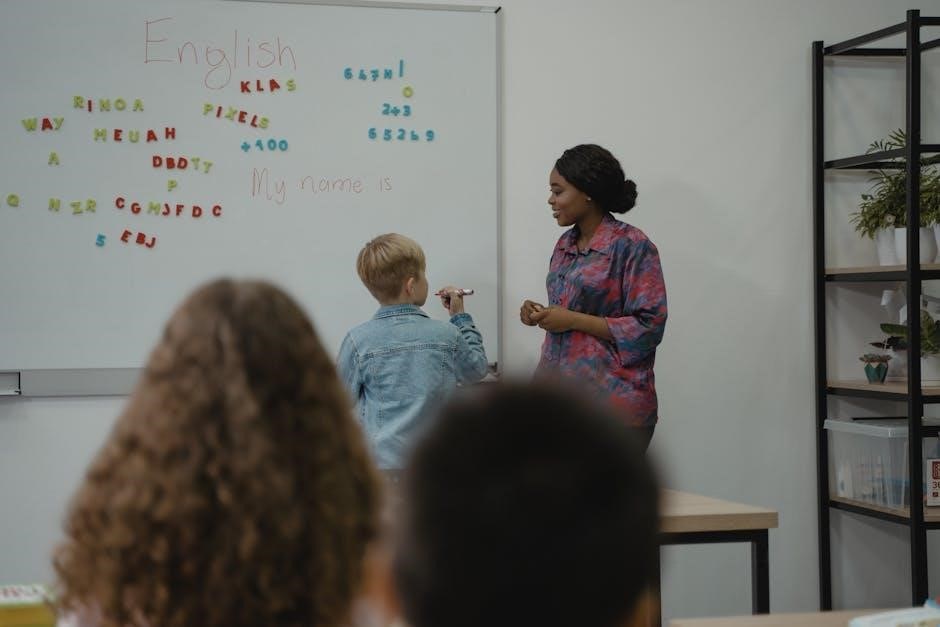
A core focus is leveraging innovative instructional design models to improve engagement and comprehension within STEM disciplines. This includes exploring and implementing cutting-edge technologies, alongside a commitment to ensuring accessibility and inclusivity for all learners. The goal is to equip educators with the tools and strategies needed to effectively teach complex STEM concepts.
Furthermore, Udutu’s approach emphasizes practical application and hands-on learning, fostering a deeper understanding of STEM principles. By integrating technology thoughtfully, we aim to inspire the next generation of STEM professionals and innovators, preparing them for success in a rapidly evolving technological landscape.
Higher Education Digital Learning
Udutu is at the forefront of digital learning innovation within higher education, actively exploring emerging instructional design models to enhance the online learning experience. This includes a dedicated focus on creating AI-powered learning experiences that personalize education and improve student outcomes.
Our approach centers on developing effective online teaching strategies that leverage technology to foster engagement, collaboration, and critical thinking. We assist institutions in transitioning to and optimizing digital learning environments, ensuring accessibility and inclusivity for a diverse student body.
Udutu’s expertise extends to designing and implementing robust online courses, utilizing multimedia production to create compelling learning materials. We are committed to supporting faculty in adopting new technologies and pedagogical approaches, ultimately transforming higher education through innovative digital solutions.
Workforce Development Training
Udutu specializes in designing technology-enhanced learning environments specifically tailored for workforce development, bridging the gap between education and industry needs. We focus on STEM education for K-12 and professional settings, ensuring employees possess the skills required for success in today’s rapidly evolving job market.
Our solutions encompass comprehensive training programs, leveraging instructional design principles to maximize knowledge retention and skill application. We offer on-demand solutions, building customized programs to address specific organizational challenges and performance goals.
Udutu’s commitment extends to supporting STEM teacher education, both in formal and informal settings, fostering a pipeline of qualified professionals. We integrate AI into learning design and assessment, promoting ethical and responsible AI implementation within workforce training initiatives, ultimately driving impactful results.